DTC P0420 & P0430
Issue Description
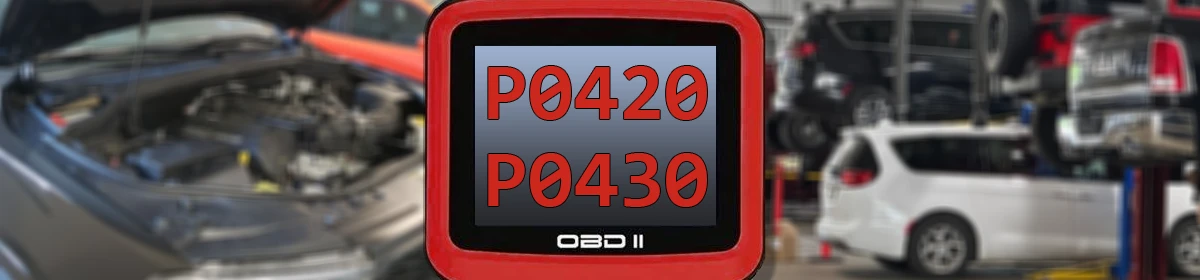
Diagnostic Trouble Codes P0420 and P0430 are emissions-related codes that indicate catalytic converter inefficiency on different banks of the engine:
- P0420 Catalyst System Efficiency Below Threshold (Bank 1)
- P0430 Catalyst System Efficiency Below Threshold (Bank 2)
In Dodge vehicles equipped with V6 or V8 engines, "Bank 1" refers to the side of the engine containing cylinder 1, while "Bank 2" is the opposite side. These codes mean the Powertrain Control Module (PCM) has detected that the catalytic converter is not reducing emissions effectively.
Symptoms
- Check Engine Light (CEL) is illuminated
- Failed emissions or smog test
- Slight decrease in fuel efficiency
- Reduced engine performance (in rare cases)
- Sulfur or "rotten egg" smell from the exhaust
- No noticeable symptoms in many cases
Causes
Both codes point to a problem with the catalytic converter system, though they apply to different engine banks. The causes for both are largely the same:
- Failing Catalytic Converter
- Aging or contamination (from coolant, oil, or unburned fuel) reduces the converter’s ability to clean exhaust gases.
- Faulty Oxygen (O2) Sensors
- Downstream (post-cat) sensors may give incorrect readings.
- Upstream (pre-cat) sensors may misreport fuel mixture, overloading the cat.
- Exhaust Leaks
- Leaks in the exhaust system (especially near the O2 sensors) can cause skewed sensor readings and false code triggering.
- Engine Performance Issues
- Misfires, fuel injector problems, or bad MAF sensors can lead to poor combustion, damaging the converter over time.
- Contamination
- Oil or coolant entering the combustion chamber due to valve seal or head gasket failure can degrade catalytic efficiency.
Diagnose
- Step 1: Scan for Codes
- Use an OBD-II scanner to confirm P0420 (Bank 1) or P0430 (Bank 2).
- Check for related codes: misfires (P030x), oxygen sensor faults (P013x/P015x), lean/rich codes (P0171/P0172).
- Step 2: Visual and Physical Inspection
- Look for exhaust leaks near catalytic converters or O2 sensors.
- Check the catalytic converter for overheating, rattling, or physical damage.
- Step 3: Analyze O2 Sensor Readings
- Upstream sensors (should fluctuate).
- Downstream sensors (should be steady if the cat is working).
- Step 4: Check Fuel Trim and Sensor Accuracy
- Imbalanced fuel trims may indicate fuel system problems.
- Compare real-time data to manufacturer-specified voltage or frequency ranges for the O2 sensors.
Solutions
- Replace the Catalytic Converter
- If confirmed to be faulty or clogged, the catalytic converter must be replaced.
- Use OEM or certified aftermarket parts to ensure proper performance and emissions compliance.
- Replace Oxygen Sensors
- Downstream O2 sensors should be replaced if they are slow, unresponsive, or stuck.
- If upstream sensors are old, they should also be tested or replaced to prevent future issues.
- Repair Exhaust Leaks
- Seal any exhaust leaks before the O2 sensors to restore accurate sensor readings.
- Fix Engine Performance Problems
- Address any misfires, rich/lean fuel conditions, or ignition problems that may damage new catalytic converters.
- Stop Oil or Coolant Contamination
- Repair valve seals, piston rings, or head gaskets that are allowing oil/coolant into combustion chambers.
Preventive Maintenance Tips
- Maintain your engine with regular oil changes and tune-ups.
- Use high-quality fuel and avoid leaded or high-sulfur gasoline.
- Address misfires and fuel issues immediately to protect the converter.
- Replace O2 sensors periodically (every 60,000–100,000 miles is typical).
- Inspect the exhaust system for leaks or corrosion during routine service.